Government Overreach in Mexico: The Current War Against Individual Privacy Rights
by @muhshrooms · 2026-10-03
# Anonymity Under Attack in Mexico
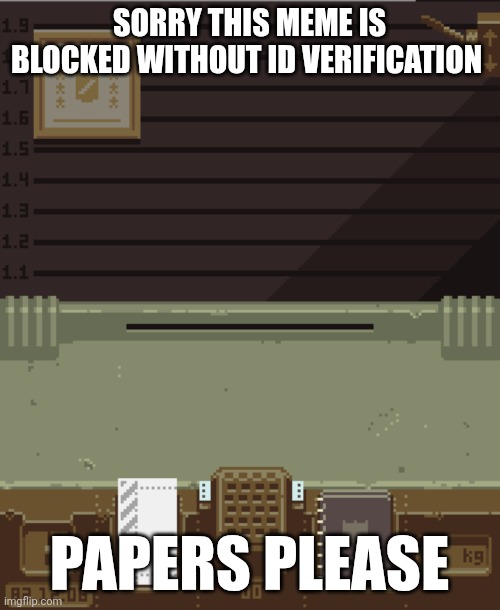
People should not have to identify themselves when they are not committing any crimes. Everyone with a sane mind knows this. Whatever happened to innocent until proven guilty? Are we supposed to give up our right to privacy in the name of authority? Why are we being subjected to this overreach of power, forcing people in Mexico to hand over their credentials for the supposed sake of national security or combating criminality, while the government itself is breaching our rights?
It's quite obvious to anyone who studies history and can recognize patterns that this has very little to do with protecting our liberties. It is another means of gaining more control and surveillance over the masses.
If no one has harmed anyone, stolen anything, defrauded anyone, or otherwise committed an actual crime, there is no wrongdoing to justify demanding that an innocent person identify themselves simply because they want to communicate.
Whatever happened to being presumed innocent until proven guilty?
Are we presumed innocent of jurisdiction? If so, why can't we decide for ourselves who we want to provide us with services that give us the ability to communicate freely without being subjected to scrutiny and sanctions for refusing to obey them?
### What Mexico Is Actually Requiring
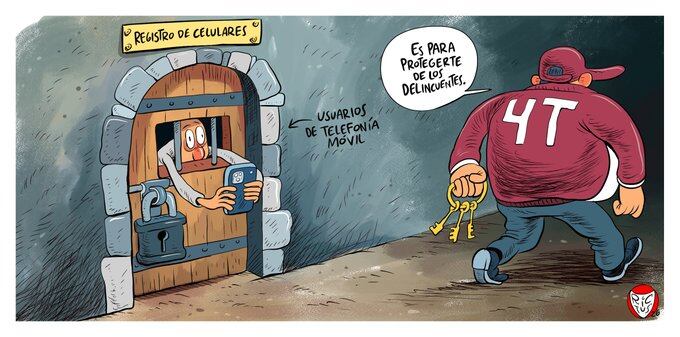
As of 2026, Mexico has moved from allowing millions of mobile lines to operate without being linked to an individual toward a system in which mobile lines are associated with an identified person. The CRT says the registration requires an official ID and CURP, and explicitly describes the policy as a way to “eliminate anonymity” from mobile lines.[¹](https://www.gob.mx/crt/es/prensa/crt-anuncia-calendario-y-fechas-limite-para-registro-de-lineas)
The consequences aren't theoretical. The registration is being rolled out according to the last digit of each telephone number, and lines that miss their deadline can be suspended. For numbers ending in 3, for example, the deadline was September 30, 2026; numbers ending in 4 have a deadline of October 15.
The government's own registration portal tells people that they must photograph their identification and complete an identity-validation process using their phone's camera.
The CRT isn't hiding the purpose of the system. It has repeatedly described the policy as a way to eliminate anonymous mobile lines and make it easier to investigate crimes associated with telephone numbers.
### The Government's Excuse
Fraud. Extortion. Virtual kidnapping. Organized crime. The argument is that anonymous telephone lines make it easier for criminals to operate, so everyone using a mobile line should be identifiable. However, that logic turns every person into a potential suspect before they've done anything wrong. Instead of investigating a crime and identifying the person responsible, the system moves toward requiring identification from everyone in advance. Your credentials become the price of entry for something as ordinary as having a telephone connection. And we're just expected to accept this? All because the government says it's for our protection?
No.
The existence of criminals does not establish a right to treat everyone else as though their anonymity is evidence of criminality. Just because some people want to exploit those channels of anonymity does not grant them the right to force us to surrender our privacy, and personal identity, over to a company that will undoubtedly be breached later on. Handing more personal information to an institution does not magically make that information safe. It creates another collection of sensitive information that can be accessed, exposed, abused or demanded later.
If crime is being committed then the crime itself should be investigated, but not this act of making everyone else comply with such ridiculous arbitrary demands written on toilet paper by political criminals paid for by your extorted dollars.
The government asks us to trust that this additional power will be used for our protection. History gives us countless reasons to question that assumption.
### But What About the Data?
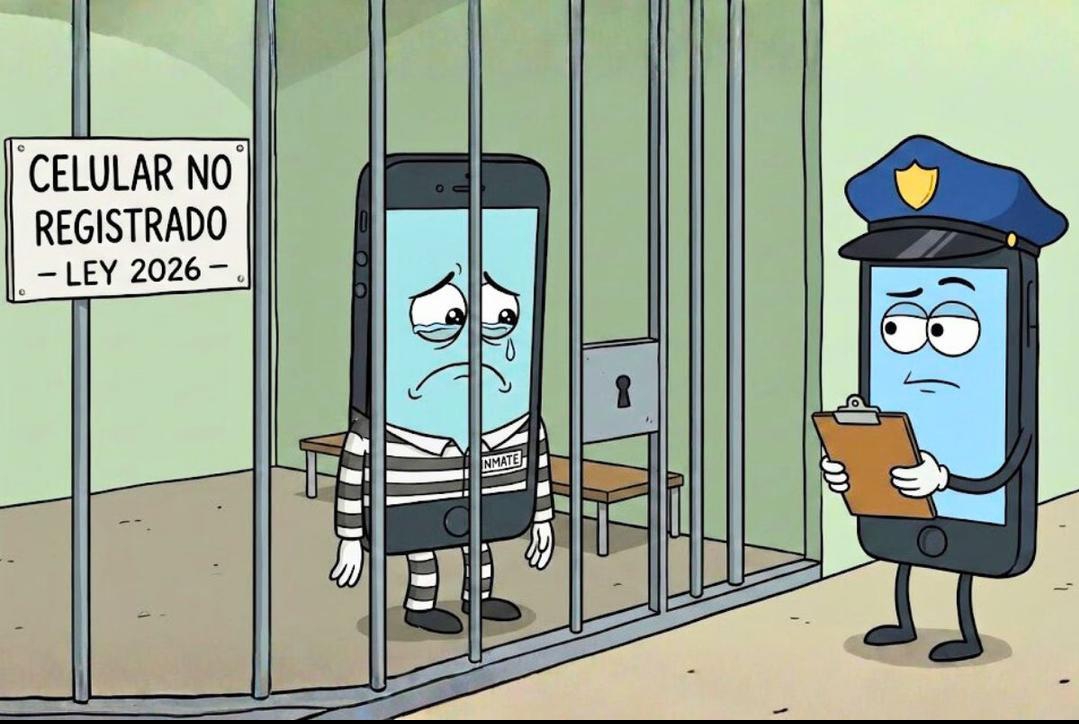
We're being told to hand over our name, CURP and identification to our telephone companies because this is supposed to make us safer. The government says the information will be protected by the companies and that the registration process is designed to protect our identity. And we're supposed to just trust that every company holding this information will keep it secure forever? That's a hell of a lot of trust to demand from ordinary people.
The government says there will not be one giant government database and that the telephone companies will be responsible for safeguarding the information. That doesn't make the information disappear. It means millions of people's identities are now sitting inside centralized systems operated by private companies.
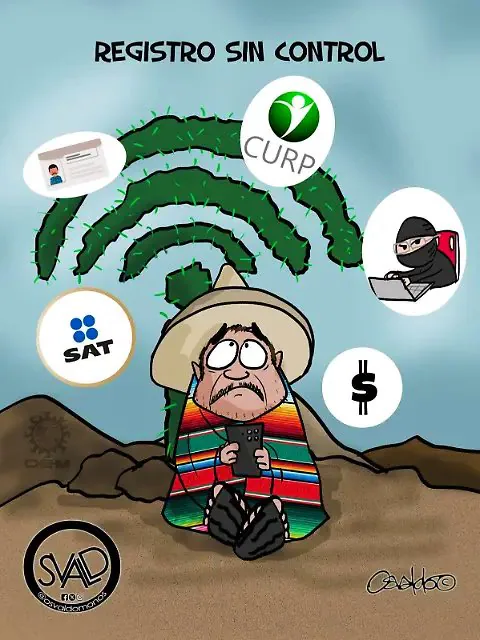
We've already seen how quickly things can go wrong. A January 2026 report in the Mexican Chamber of Deputies', Gaceta Parlamentaria, cited a reported breach of Telcel's registration platform shortly after the registration process began, with sensitive user data reportedly exposed.[²](https://gaceta.diputados.gob.mx/Gaceta/66/2026/ene/20260114-III-5.html) The government's own Secretariat for "Anti-Corruption" and "Good" Government, also disclosed in December 2025 that it was investigating suspected breaches involving personal-data databases held by public institutions.
So we're told that handing over more information will make us safer, while the existence of that information simultaneously creates something criminals would have a reason to steal. That's the problem with collecting information in the first place.
Once the information exists on a central server, it has value, because it can be stolen, exposed, abused, sold, accessed by people who shouldn't have it, and once you've surrendered it, you don't get to take it back simply because you decide you no longer trust the people holding it. The government even says that if a line is involved in a crime, authorities can "request" information from the telephone company through the procedures established in the National Code of Criminal Procedures.
"Request". That's an interesting word for something backed by the power of the state.
If the telephone company refuses, can it simply say no and walk away? If an ordinary person refuses to comply with a government "request," are there no consequences?
A request is supposed to be voluntary. When refusal carries the possibility of legal consequences, sanctions, investigations, or some other exercise of coercive power, calling it a "request" doesn't change the nature of the relationship.
The same problem exists throughout government. You are told to comply with a request, a requirement, an order, a registration, a summons, a regulation, or some other command. Then try refusing and see what happens.
The threat doesn't always have to be written directly into the sentence, the threat is the institution itself.
They also have the power to define what a crime is and a crime is simply whatever they say it is. It can be as simple as not obeying arbitrary commands from individuals with the same rights and the lack of rights(moral right to rule over you) as you.
We seen this happen plenty in the United States when people refuse to comply with unlawful demands and call it obstruction for doing so and then be arrested and charged for it. It's no different here.
So let's be honest about what they're building here. A system designed to make anonymous telephone lines disappear, while creating a permanent association between people's identities and their telephone numbers, but yet we're supposed to believe that giving up anonymity is what makes us safer.
### There Are Alternatives
**Do We Actually Have To Accept This?**
Hell no, and you shouldn't! For reasons already explained above.
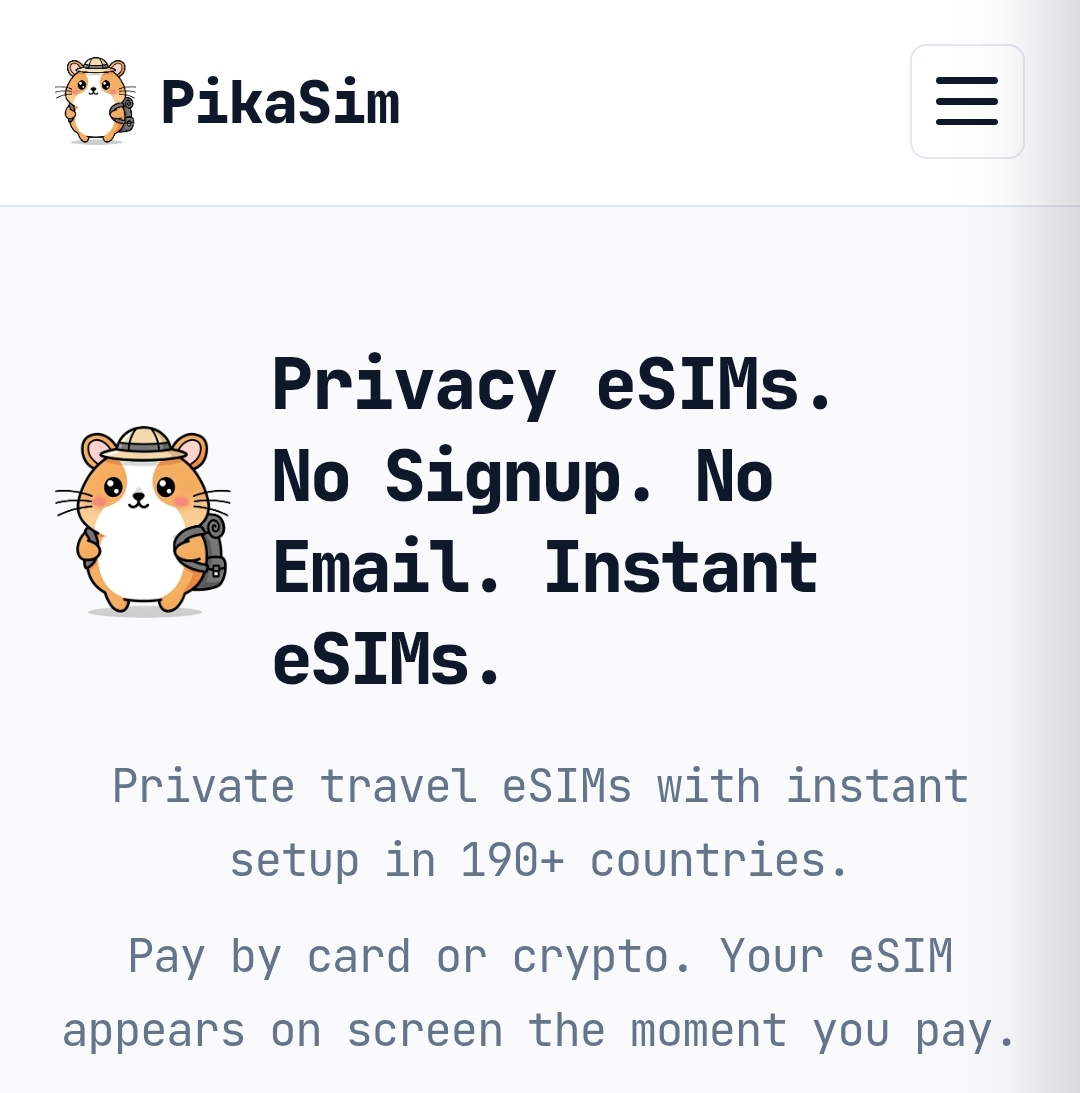
[PikaSim](https://pikasim.com/) is one of the alternatives that I'm currently using on my own phone in Mexico right now. It provides mobile connectivity without requiring me to hand over my CURP and government identification just to use the service. I can also pay for it with Monero.
If I want telephone service and someone provides telephone service, then I pay them and I use it. Why does anyone else need to know who I am?
Why does the government need to decide that I must identify myself before I can communicate through a telephone that doesn't even belong to them?
This isn't some theoretical possibility. The service already exists, and I'm using it. That's what makes the whole idea of mandatory identification so strange. We're told that associating every mobile line with a real identity is necessary, yet there are providers operating outside that model.
The government can tell Mexican carriers what information they have to collect and can impose whatever requirements the statutea currently imposes on domestic mobile lines, but that still doesn't answer the question of why I should have to surrender my identity simply because I want to communicate.
My phone belongs to me. My ability to communicate belongs to me, and I should be able to decide who provides that service without having the government insert itself between me and the person I'm doing business with, period.
And then there's the payment.
PikaSim accepts Monero, which means I don't have to hand over my banking information or identity just to pay for the service. I can use money that was designed to give people the ability to transact without requiring every payment to be tied to their identity.
That's exactly the kind of thing that becomes more important when governments start demanding identification for ordinary activities.
If every part of your life has to be connected to your legal identity, eventually there is no such thing as anonymity anymore.
Monero gives people another option. It doesn't require asking permission from a bank or financial institution every time you want to make a private transaction. You can actually hold it yourself and use it yourself.
That doesn't make every transaction magically anonymous, and it doesn't make someone invisible to every possible form of surveillance, but it does give people something that centralized financial systems generally don't: the ability to transact without automatically handing your identity to an intermediary.
That's what autonomy looks like in practice. You don't wait for someone in government to decide that you're allowed to have privacy. You find ways to keep it.
Free people don't ask for permission!™
- @yayogerardo, writer, researcher, analyst, anarchist, autonomist, Humanoid 🃏™️

---
### Find Me
[Substack](https://yayogerardo.substack.com/)
---
### Services
[Independent Research & Investigation Services](https://beblurt.com/@yayogerardo/independent-research-investigation-services-1789635522839)
***
### Support the work with The Worlds Most Private Currency — Monero(XMR).
**XMR Adress:**
> 86fXjLUF7W9SwGSjTtsbqq4t1LKzzypEZa1t77S5c68WF3yK9SmEfzPTtRyjUhDSk9Zn7p1ahFJT4PcKW8MN4h3QRpjx2Q5
<sub>Posted via [HiveSuite](https://hivesuite.app/@muhshrooms/government-overreach-in-mexico-the-current-war-ag-kxz48coq)</sub>